Robotic bending cell: the complete guide to components, costs and ROI
A robotic bending cell puts a 6-axis robot next to a CNC press brake and lets it load, bend and...

An ageing press brake that still bends straight is a tempting thing to keep. The question is whether to modernise it with a retrofit or replace it outright. The right answer depends on the machine's mechanical health, your accuracy needs and the real cost of downtime.
A retrofit updates the parts that age fastest while keeping the frame: a modern CNC control, a motorised backgauge with extra axes, angle measurement, and up-to-date safety such as laser guarding. It can turn a sound but outdated machine into one that programs quickly and holds angle, at a fraction of the cost of new.
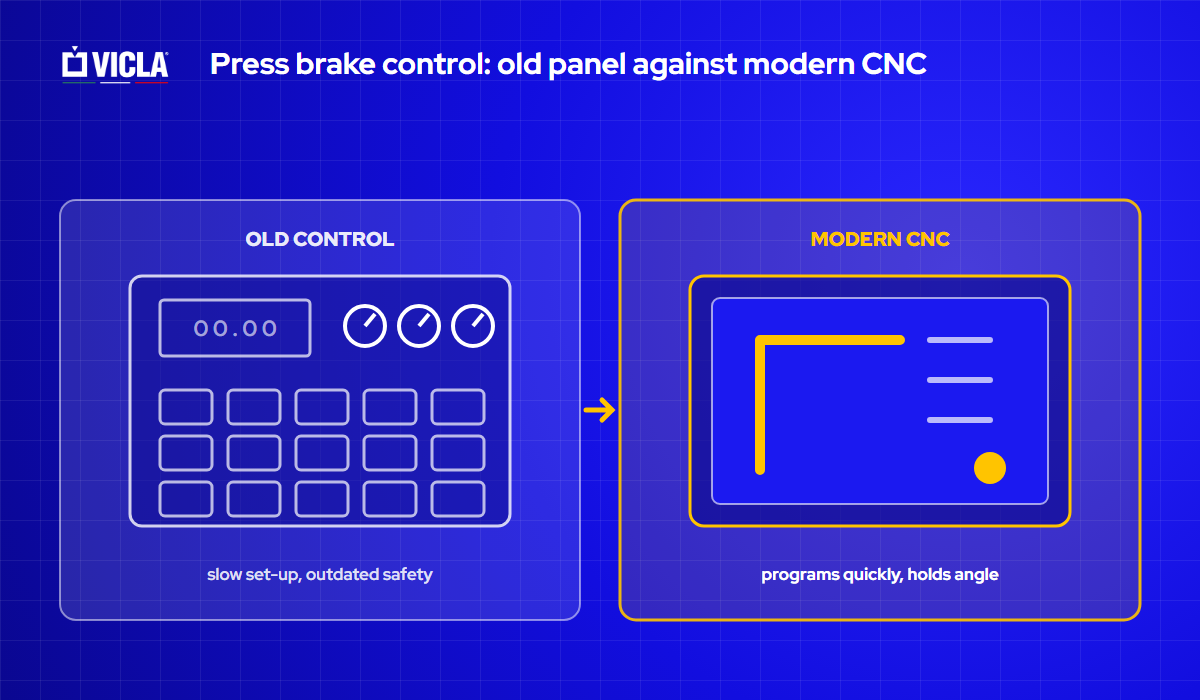
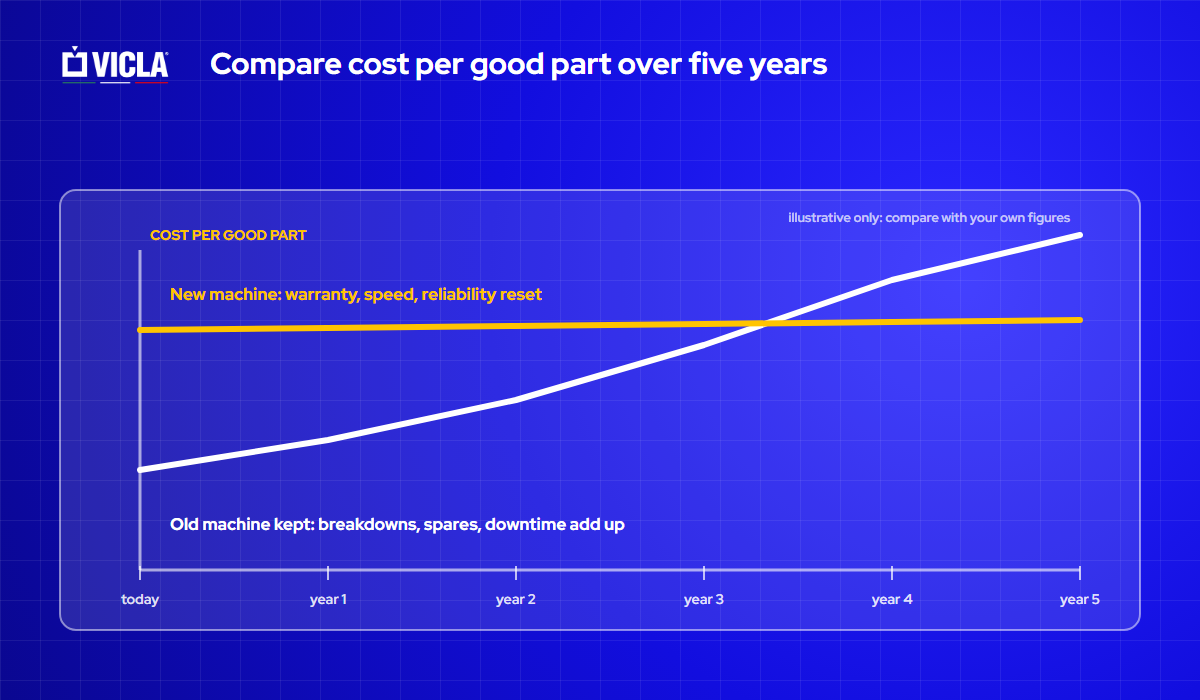
A retrofit is cheaper up front and usually quicker to commission, but it cannot fix a tired frame or add capacity the machine never had. A new machine costs more but resets reliability, adds speed and comes with warranty and support. Compare them on cost per good part over the next few years, not just sticker price, and include the hidden cost of downtime on the old machine.
Retrofit if the iron is good and only the brains and safety are old. Replace if the iron is tired, too small, or holding back the jobs you want to take. If you are between the two, talk it through against your actual part mix with the VICLA team.
Usually yes, but it keeps the existing frame and capacity.
It gets close on control and setup, but not on a worn mechanical base.
A retrofit is typically faster to commission; a new install depends on lead time and layout.
A robotic bending cell puts a 6-axis robot next to a CNC press brake and lets it load, bend and...
25th - 29th October 2016HANOVERPAV 11 – STAND A166
When there is something new in VICLA our first...
Once your parts run past about 6 metres, you're really choosing between two things: a tandem press...