Hydraulic press brakes: how they work, pros and cons
The hydraulic press brake is the most common bending machine in fabrication, and for good reason....

Setup is the hidden cost of bending. Every time an operator strips and rebuilds the tooling for a new job, the machine is not making parts. An automatic tool changer attacks that cost directly, and it is what makes small batches and a high product mix profitable.
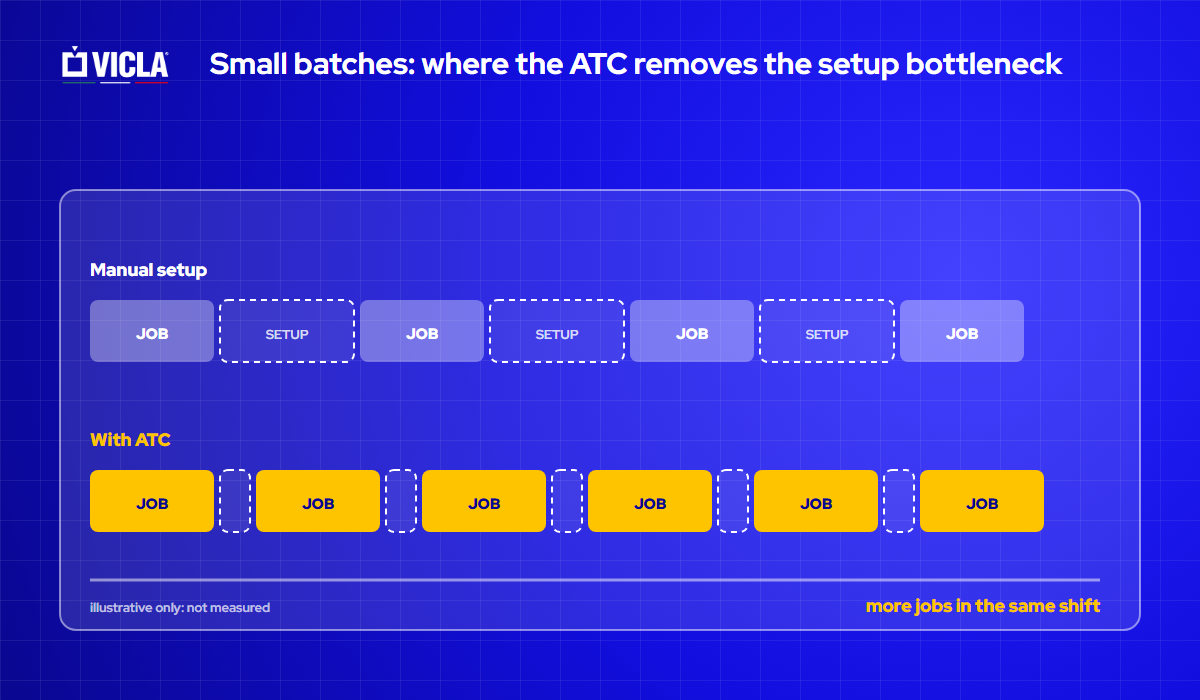
An automatic tool changer stores press-brake punches and dies in a magazine and loads them into position on its own, following the program for the next job. Instead of a manual tooling change that can take many minutes, the machine sets itself up in a fraction of the time, with no lifting and no setup errors.
If you run long batches of the same part, the payback is slower. If your work is varied and small-lot, an ATC can transform your output.
Beyond raw setup time, an ATC brings consistency (the setup is right every time), safety (no heavy manual tool handling) and the ability to run lights-out or with less supervision. It turns a flexible machine into a flexible, fast one.
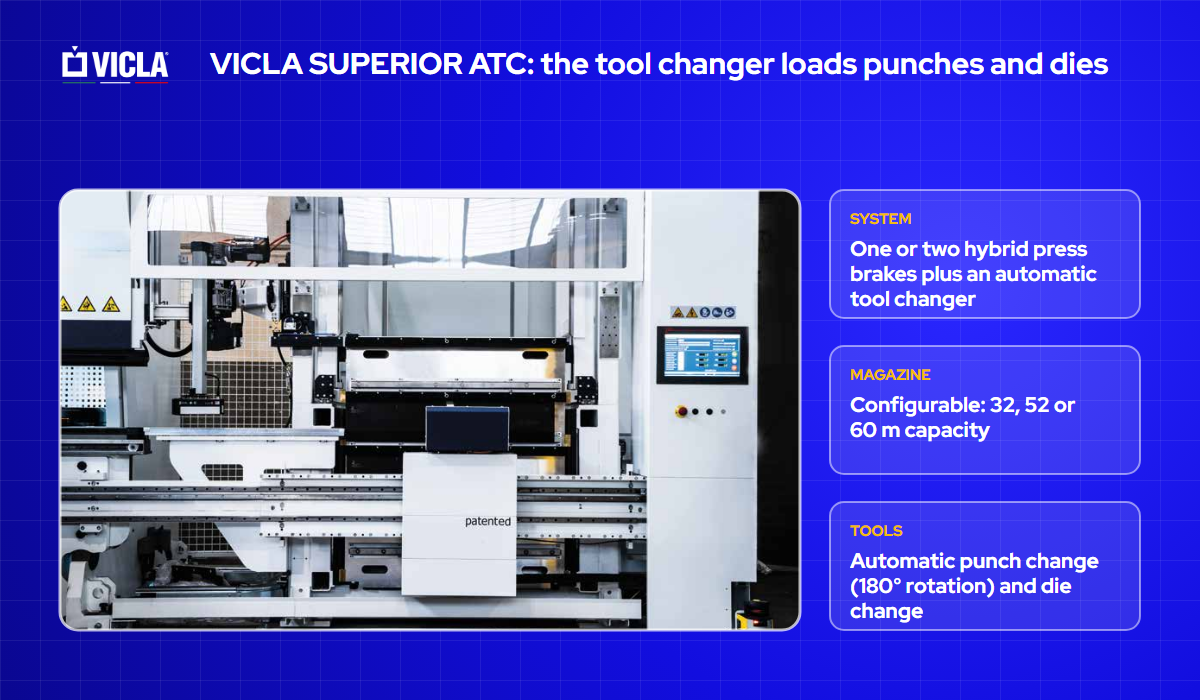
The VICLA SUPERIOR ATC combines one or two hybrid press brakes with an automatic tool changer, built to speed up setups for small and varied batches. The same automatic tooling is available inside the MATRIX robotic cells, so the whole bending process runs with minimal intervention.
It cuts tooling setup from many minutes of manual work to a quick automatic change, which adds up fast across many jobs.
No. It is most valuable exactly where batches are small and varied, which is common in job shops.
Yes, VICLA integrates ATC with its MATRIX robotic cells.
The hydraulic press brake is the most common bending machine in fabrication, and for good reason....
Hydraulic press brakes, known for their precision and power, utilize oil cylinders to control the...
Both machines bend sheet metal, but they belong to different leagues. A sheet metal brake is a...