Automatic tool changers for press brakes
Setup is the hidden cost of bending. Every time an operator strips and rebuilds the tooling for a...

The hydraulic press brake is the most common bending machine in fabrication, and for good reason. It combines force, control and value in a way that suits almost every shop. Here is how it works and where it wins.
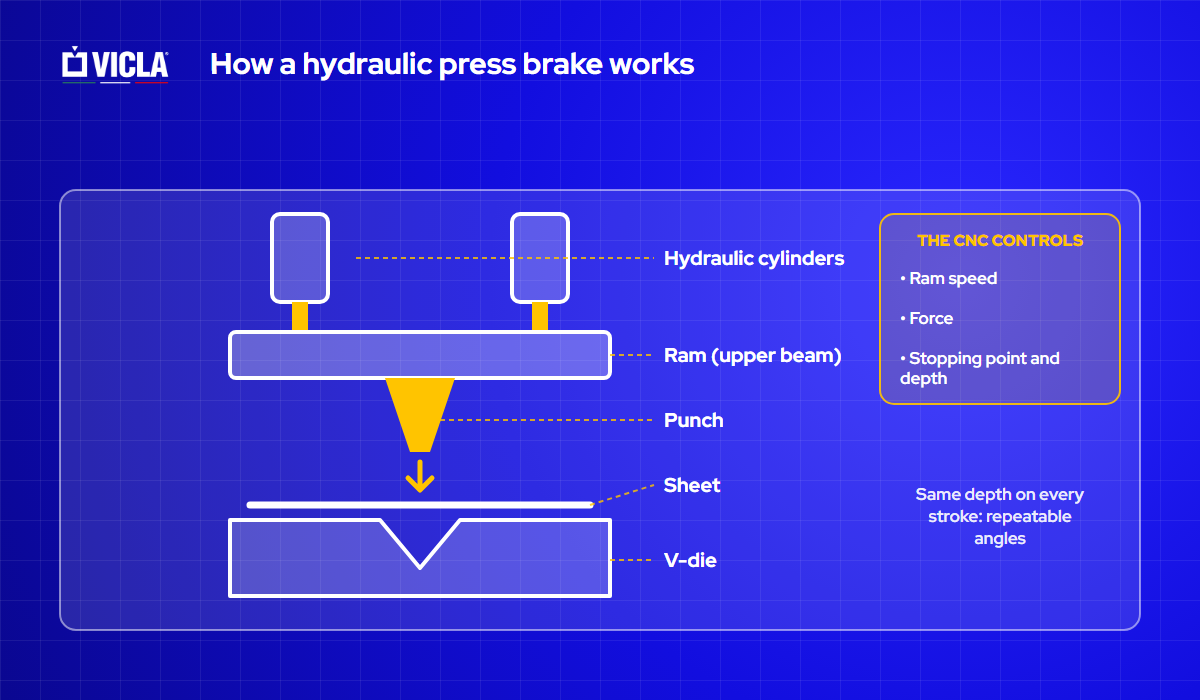
Two hydraulic cylinders drive the upper beam down, pressing a punch into a V-die to form the bend. Because the cylinders are controlled, the ram speed, force and stopping point are all adjustable, and the machine can hold the exact depth needed for a precise angle on every stroke. Modern machines add CNC control, a motorised backgauge and automatic crowning to keep long bends linear.
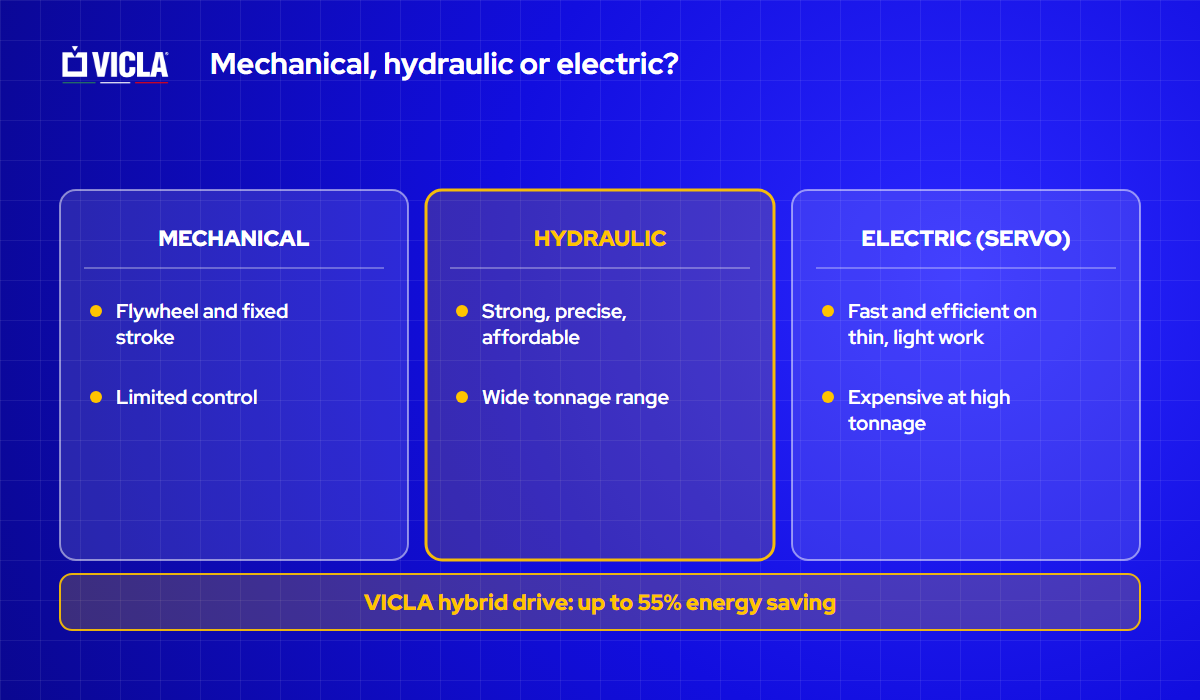
Older mechanical brakes use a flywheel and a fixed stroke, which limits control. All-electric (servo) brakes are fast and efficient on thin, light work but get expensive at higher tonnage. Hydraulic machines sit in the sweet spot: strong, precise, affordable and able to cover a wide tonnage range. VICLA closes the one historic gap, energy use, with a hybrid drive.
A traditional hydraulic machine uses more energy than a servo-electric one and can be a little noisier. VICLA answers both with its hybrid system, which saves up to 55% energy (up to 78% on the Hybrid System Plus) while keeping the strength and range of hydraulics.
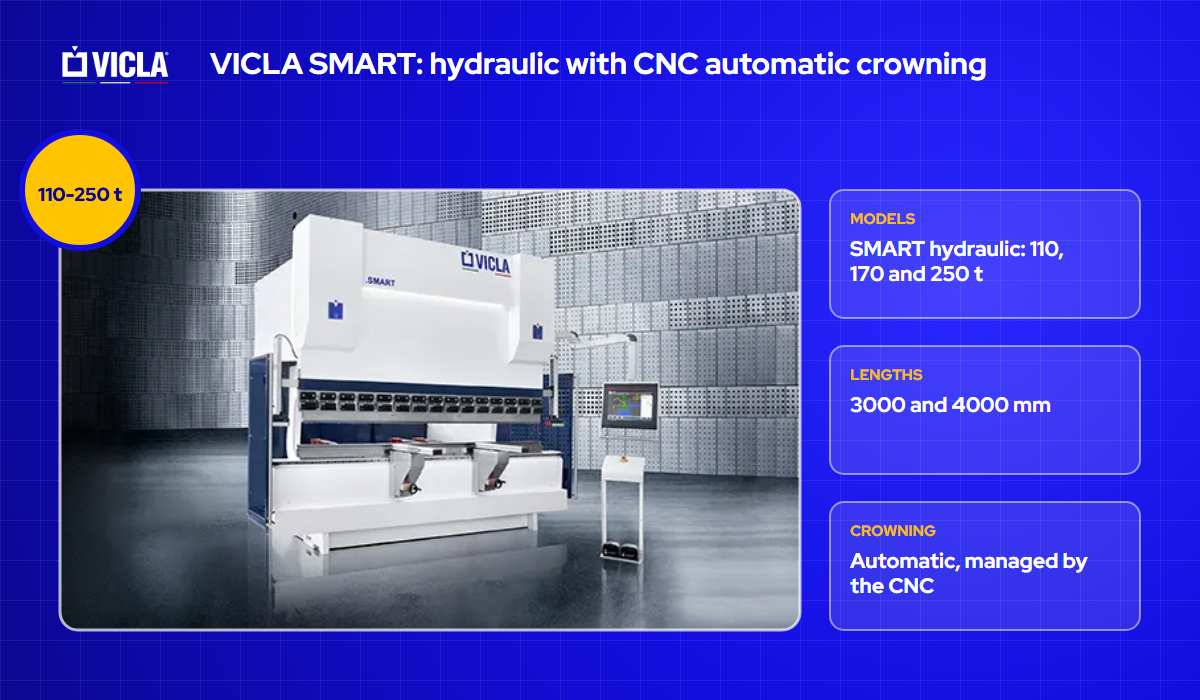
The VICLA SMART is a hydraulic press brake with CNC automatic crowning and a strong value-for-money balance, available from 110 to 250 tons. For a full hybrid flagship with up to 6 backgauge axes and Clever Crowning, step up to the SUPERIOR range.
For range and tonnage, yes. Electric wins on very thin, light high-speed work; hydraulic covers far more of a shop's needs.
Traditional ones use more, but a hybrid drive like VICLA's cuts that by more than half.
From small machines to several hundred tons, far beyond what electric brakes reach affordably.
Setup is the hidden cost of bending. Every time an operator strips and rebuilds the tooling for a...
The highly competitive market of our days brings companies to travel the road of increasing...
Hydraulic press brakes, known for their precision and power, utilize oil cylinders to control the...